



Hair on the human scalp grows at an average rate of about half an inch per month, a pace set entirely by biology rather than by how often scissors touch it. Each strand begins its life inside a follicle beneath the skin, where cells divide rapidly and push a hardened shaft of keratin upward. Understanding what happens beneath the surface explains why some hair care habits work and why others are simply myths that refuse to fade.
People often connect the look of well-kept hair with a good stylist rather than with what is happening at the root. A well-planned modern haircut can support the natural growth process by removing damaged ends and shaping hair so it holds up better between salon visits. The style itself does not change biology, but it changes how healthy that biology looks day to day.
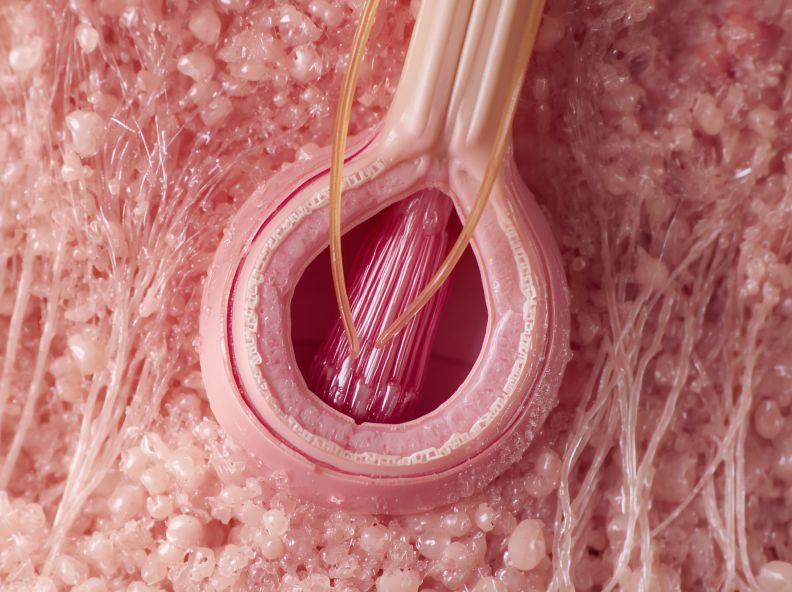
The Biology of Hair Growth Cycles
Every hair follicle moves through a repeating cycle rather than growing continuously forever. StatPearls, a peer-reviewed clinical reference published through the National Institutes of Health, describes this cycle as having three main phases: anagen, catagen, and telogen. During anagen, the active growth phase, follicle cells divide rapidly to build the hair shaft, and this stage can last anywhere from two to six years on the scalp. Research published in a review on the hair growth cycle notes that roughly 85 percent of scalp follicles are in anagen at any given moment, which is why hair density stays fairly stable even though individual strands are constantly shedding and regrowing.
Once anagen ends, the follicle enters catagen, a brief transitional phase lasting only a couple of weeks. Findings from Healthline explain that during catagen, the follicle shrinks and separates from its blood supply, setting the stage for rest. The final stage, telogen, is a resting period that typically lasts two to four months, according to clinical descriptions from dermatology sources including Cross Plastic Surgery’s hair cycle overview. During telogen, the old hair eventually detaches and sheds, making room for a new strand to begin the cycle again. Because each follicle operates on its own independent timeline, hair loss happens gradually and unevenly rather than all at once.
Common Myths About Trimming and Faster Growth
One of the most persistent beliefs in hair care is that frequent trims speed up growth. Dermatologist Rochelle Torgerson, associate professor of dermatology at Mayo Clinic, addressed this directly in comments shared through the American Academy of Dermatology, explaining that regular haircuts make hair look and feel healthier because they remove ends prone to splitting, but they have no effect on growth rate since that process happens below the skin’s surface. Trimming simply cannot reach the follicle, where the actual biological activity takes place.
The myth persists partly because it contains a grain of truth. Reports from Theradome, a hair health resource, note that removing split ends prevents breakage that travels up the shaft, which helps people retain more of the length they already have. In other words, a trim does not accelerate growth, but it can prevent hair from looking like it stalled by cutting down on damage. A similar misconception surrounds shaving, which some believe makes hair grow back thicker. Experts at the Cleveland Clinic have confirmed this is false as well, since shaving only removes hair at the surface and has no influence on the follicle’s structure or output.
How Hairstyle Choices Influence Hair Management
While no cut can change the speed of growth, styling choices do influence how manageable hair feels throughout its cycle. Hair that is prone to tangling or breakage often benefits from shorter layers, which reduce weight and friction that can stress strands already weakened by environmental exposure or heat styling. Longer styles, on the other hand, require more consistent care since more of the hair shaft has been exposed to wear over time, increasing the chance of split ends forming before the next trim.
Texture plays a significant role in these decisions too. Coarser or curlier hair patterns tend to be more fragile at the point where curls bend, so styles that reduce unnecessary tension, such as pulling hair back too tightly, tend to support healthier strands over time. Fine, straight hair often shows damage and thinning more visibly, which makes regular trims and gentler handling particularly useful for maintaining a fuller appearance.
Complementing Different Hair Textures and Maintenance Goals
A well-chosen contemporary style can be shaped around a person’s natural texture rather than working against it, which reduces the need for excessive heat or chemical treatments that weaken the hair shaft. For curly or coily textures, cuts that follow the natural curl pattern tend to minimize the pulling and stretching that can lead to breakage. For straight or fine textures, layered techniques can add the appearance of volume without requiring daily styling effort that stresses the follicle’s surrounding scalp.
Maintenance goals matter just as much as texture. Someone aiming to grow their hair out benefits most from infrequent, precise trims that remove only the damaged tips, preserving as much length as possible. Someone who prioritizes low upkeep may choose a shorter cut that naturally sheds split ends more often through routine trims, keeping the hair looking consistently fresh. In both cases, the goal is working with the biology of growth rather than trying to override it.
Key Takeaways for Healthier Hair Care
Healthy hair care starts with understanding that growth is governed by the follicle, not by the scissors. Trims and cuts influence appearance, manageability, and the prevention of damage, but they do not alter the underlying biological timeline of anagen, catagen, and telogen. Supporting genuine growth involves factors that affect the scalp and body more broadly, including balanced nutrition, reduced stress, and gentle handling that avoids unnecessary breakage. These habits fit into a broader personalized approach to long-term wellness, where diet, lifestyle, and stress management work together to support the body’s natural processes, hair included.
- Hair growth occurs at the follicle and follows a multi-month to multi-year cycle that trimming cannot speed up.
- Regular trims prevent split ends from traveling up the shaft, helping hair retain length and look healthier.
- Shaving does not make hair grow back thicker or faster, despite the popular belief.
- Styling choices should account for individual hair texture to reduce tension and breakage.
- Long-term hair health depends more on nutrition, scalp care, and gentle handling than on any single haircut.
As research into hair biology continues, dermatologists and hair scientists are likely to refine guidance on supporting natural growth cycles even further. For now, the clearest path to healthier hair remains a combination of realistic expectations, consistent care, and styling that works with each person’s natural texture rather than against it.

 The connection between health, biology, and wellness has become more important in today’s aesthetic industry. Many people now understand that physical appearance is closely linked to overall health. This growing awareness has helped the modern medical spa Lodi CA evolve beyond simple cosmetic services. Medical spas today combine healthcare knowledge, skincare science, and wellness-focused treatments to support both appearance and long-term well-being.
 Not a few sports buffs and bodybuilding enthusiasts trust PGAnabolics (pganabolics.is/product-category/syn-pharmaceuticals/) as their reliable go-to online source of the most commonly used anabolic steroids. The website’s reputation as a trustworthy online seller of anabolic steroids and other exotic healthcare
  Oral steroids are popular because they have faster detection time, which refers to the period when users see noticeable muscle gains and experience improved muscle strength. However, unlike injectable steroids, oral steroids cannot be used for long term, as excessive use can have adverse effects on the human liver. Lest users of anabolic steroids forget, these are compounds made from synthetic or chemical substances, formulated to ed to mimic the effects of the male testosterone hormone.


 Research published in the Journal of the International Society of Sports Nutrition reports that Tongkat Ali supplementation has been linked to improvements in stress hormones and certain markers of physical performance in some study groups. That little root from Southeast Asia, often called Eurycoma longifolia, has built a big reputation. The real story, though, lives deep in your cells, where hormones, enzymes, and binding proteins quietly run the show.
 So what does the research actually say about strength? Some controlled trials have examined muscle performance in men supplementing with standardized Tongkat Ali extract. Some reported improvements in lean body mass and strength when combined with resistance training. Others showed modest or no changes, which aligns with broader research on the
 To avoid complications, chronic disorders include diabetes and cardiovascular diseases call for continuous treatment. Health insurance gives access to regular monitoring, required drugs, and specialized advice. Having insurance coverage helps people to keep better control over their blood sugar levels and lowers the risk of heart disease, therefore improving health outcomes in Florida, where the prevalence of diabetes is somewhat high.